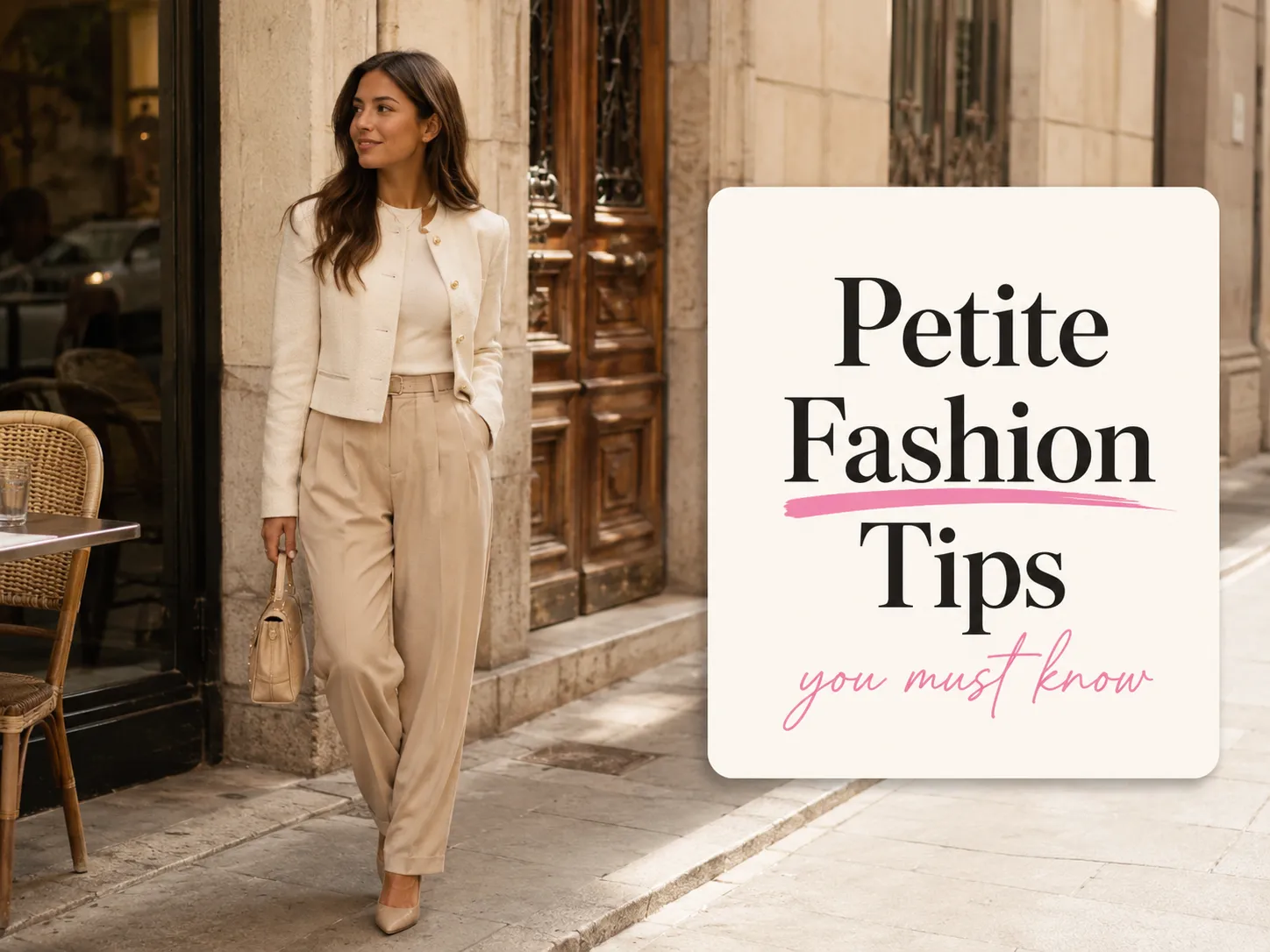
Petite Fashion Tips That Make Getting Dressed Easier
There is a very specific kind of frustration that comes with pulling on a pair of wide leg trousers and watching them swallow your entire body whole.
The hem drags, the waist gaps, and what looked effortlessly cool on the model just looks like borrowed clothing on anyone under 5’4″.
Most petite fashion tips online go straight to “wear heels” and “stick to monochrome” like that solves everything, which it does not.
The real stuff is more specific than that, and once someone starts paying attention to the actual details, like where a waistband sits or how long a jacket hits, everything clicks into place a lot faster.
None of this requires a new wardrobe or a style overhaul, just a few smarter choices that work with a smaller frame instead of fighting it.
1- High-Rise Everything
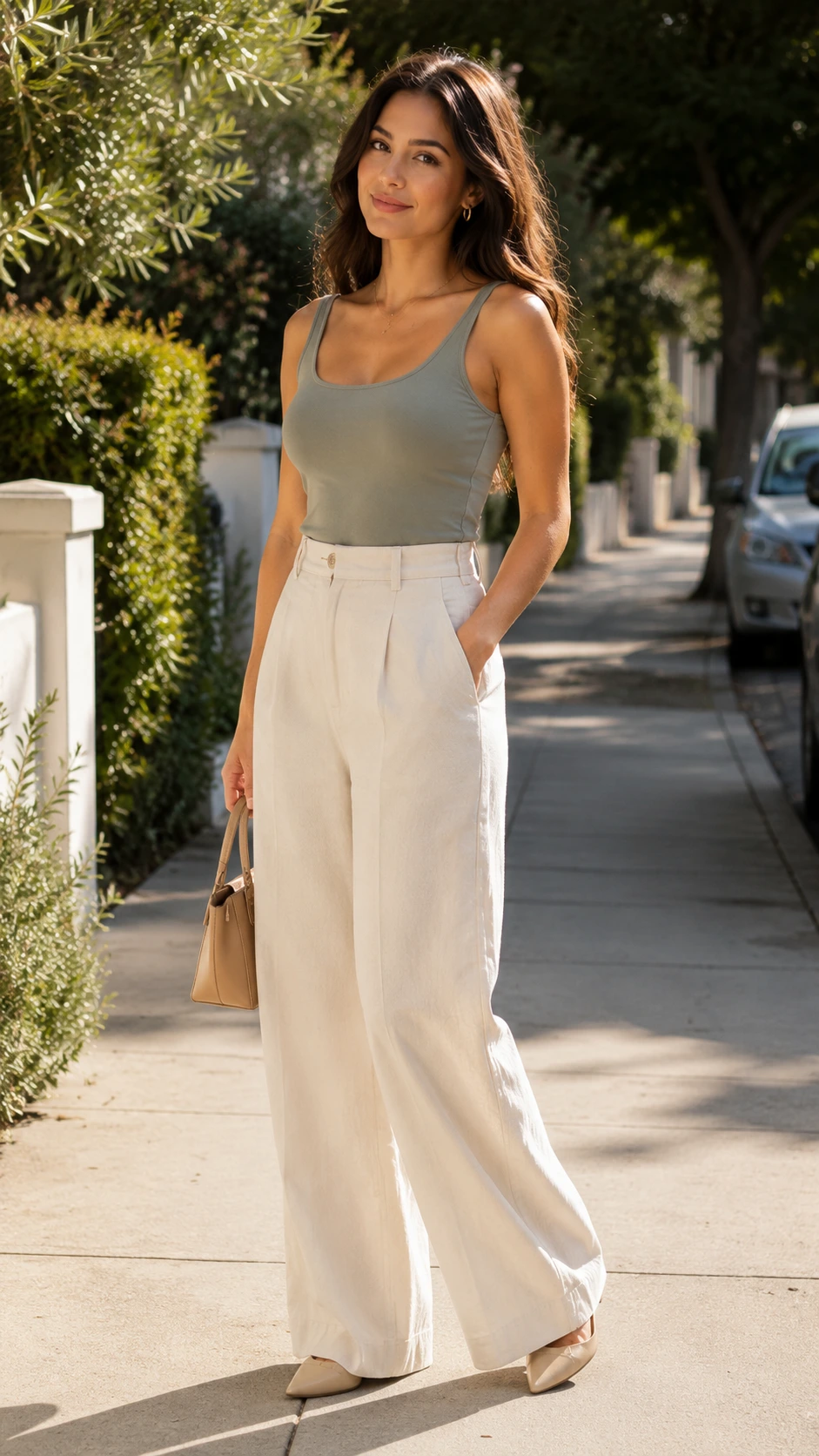
The single most effective petite fashion tip that nobody talks about enough is waistband placement.
High-rise bottoms create the illusion of longer legs almost immediately, and the effect works whether the outfit is casual or dressed up.
It works best with a tucked-in top or a cropped one so the waistline actually stays visible instead of getting buried under fabric.
Jeans, trousers, skirts, shorts, basically any bottom with a high rise is going to do more work than any heel ever could.
From what I’ve noticed, this one shift alone changes how most outfits land on a petite frame.
2- Cropped Jackets Over Long Ones
A long blazer or oversized coat hitting at the hip or lower will visually cut the body in half, which is not the goal.
Cropped jackets that end just above or at the natural waist keep the proportions clean and let the leg line read as longer.
This works with everything from high-rise jeans to midi skirts, and the jacket does not need to be small or fitted, just short enough to clear the hip.
Boxy cropped styles are actually great for petite frames because they add shape at the right place without adding length in the wrong direction.
3- Monochromatic Outfits Done Right
Wearing one colour head to toe is one of the easiest ways to look taller without trying, because there is no break in the visual line.
It does not mean everything has to match perfectly, different textures and shades in the same colour family work just as well.
Cream trousers with a warm white knit, or different shades of camel layered together, both create that uninterrupted length.
The place most people go wrong is mixing a very light top with very dark trousers, which creates a sharp visual cut right at the waist and shortens the whole look.
In my opinion, a tonal outfit is the most low-effort, high-impact thing in the petite dressing toolkit.
4- Vertical Lines and Seams
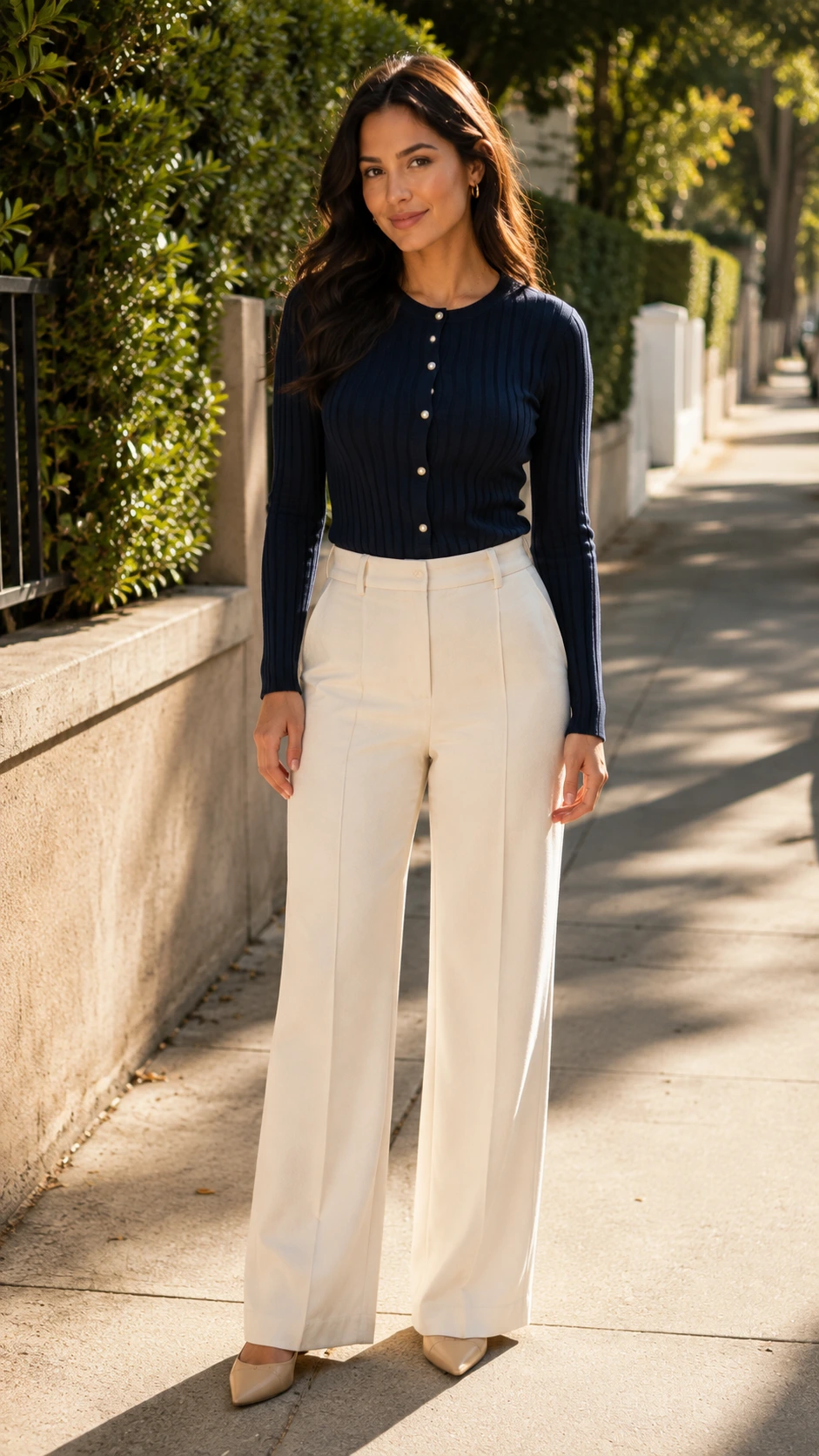
Vertical stripes are one of those petite fashion tips that sounds like old advice but genuinely holds up in real life.
The eye follows the line, and a vertical line makes a frame look taller and leaner without any effort from the person wearing it.
It does not have to be bold pinstripes either, subtle seam detailing, a front pleat, or even a column-style silhouette does the same thing.
Avoid wide horizontal stripes across the widest part of the body because they work in the exact opposite direction.
The goal is just to guide the eye up and down rather than side to side.
5- The Right Trouser Length
Trousers that are even half an inch too long will drag and make legs look shorter than they are, which sounds like a small detail until it is not.
Getting trousers hemmed is one of those investments that is worth every penny for petite frames, because the fit changes completely.
Ankle-length trousers are usually a safer starting point than full-length styles because they hit at a place that naturally lengthens the leg.
Wide leg trousers can work beautifully on petite frames as long as they are hemmed to graze the top of the foot rather than pool underneath it.
Pairing them with a heel is optional, but the hem length is not something to leave to chance.
6- Shoes That Do Not Break the Leg Line
Ankle straps are the classic example of a shoe that cuts the leg at the narrowest point and shortens the whole silhouette.
Pointed or almond toe shoes in a nude or skin-matching shade create a seamless extension of the leg, which is always a nice surprise when it works as well as it does.
Low-cut court shoes, mules, and barely-there sandals all do this naturally because there is less shoe interrupting the eye’s path upward.
That said, a chunky shoe can work on a petite frame if the rest of the outfit is clean and proportionate, it just takes a bit more thought to pull off.
The main thing to avoid is a very heavy shoe with a very cropped trouser because it tips the balance the wrong way.
7- Proportion With Oversized Pieces
Oversized pieces are everywhere right now and petite frames can absolutely wear them, they just need one anchor to keep the outfit from reading as costume.
The general rule is to balance one oversized piece with one fitted or structured piece so the proportions stay intentional.
An oversized shirt works with slim trousers or a fitted skirt.
A roomy knit works with a high-rise straight leg jean rather than wide leg, so there is still some shape happening below the waist.
Once the rhythm kicks in, it becomes almost automatic to know which pieces need balancing and which ones already do the work on their own.
The Easiest Starting Point for Petite Dressing
None of these petite fashion tips require a shopping haul or a complete rethink of what is already in the wardrobe.
Most outfits just need one small adjustment, a hem taken up, a waistband repositioned, a jacket swapped for a shorter one.
The details that actually change how an outfit reads are almost always smaller than people expect them to be.
Once the proportions start feeling right, getting dressed stops being a guessing game and starts feeling like something that just works.